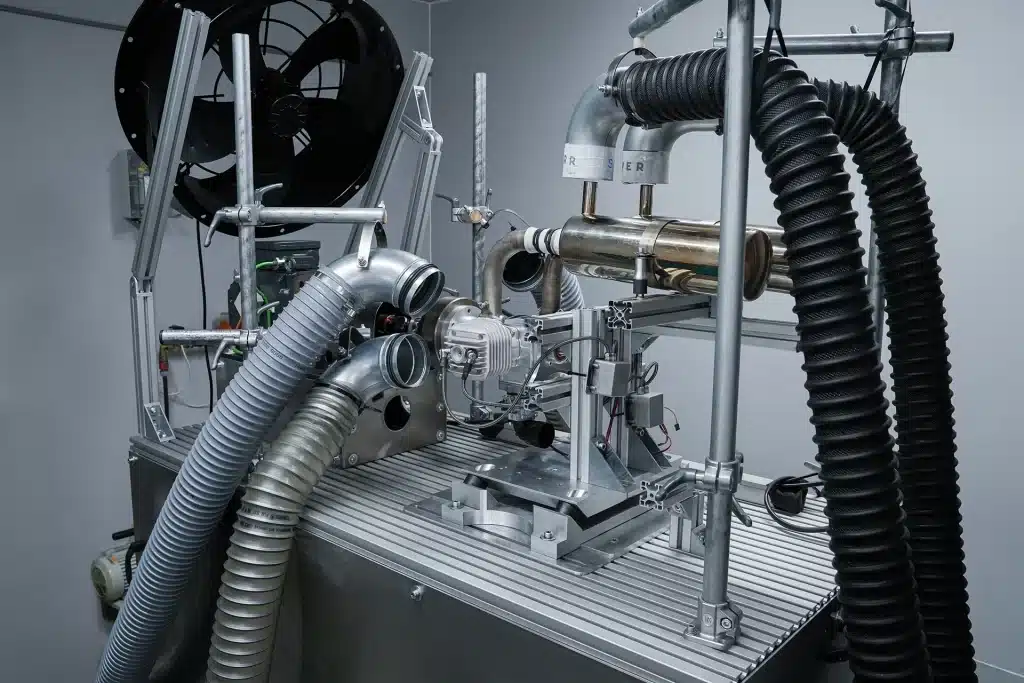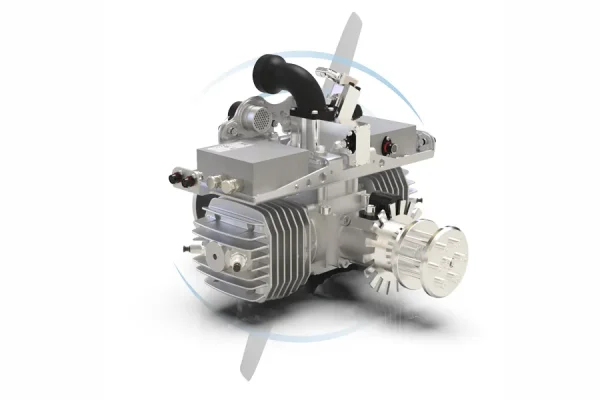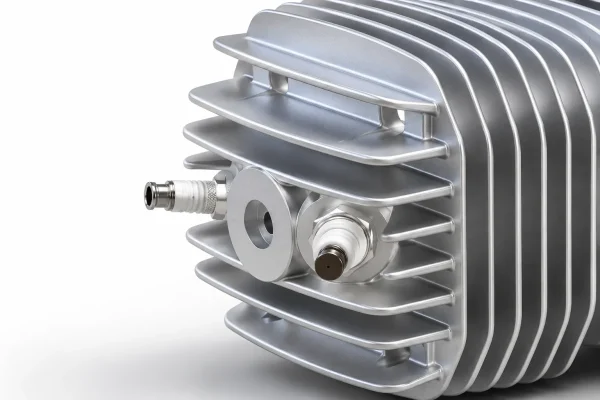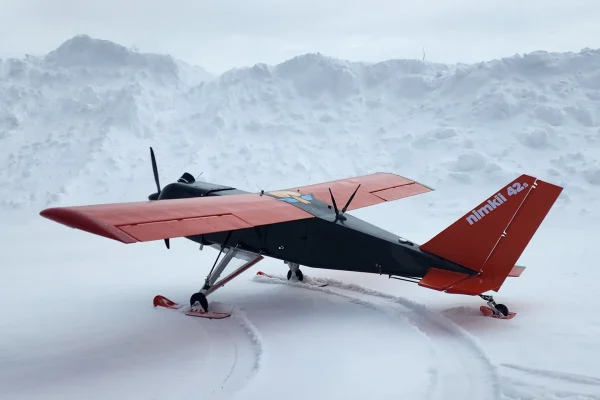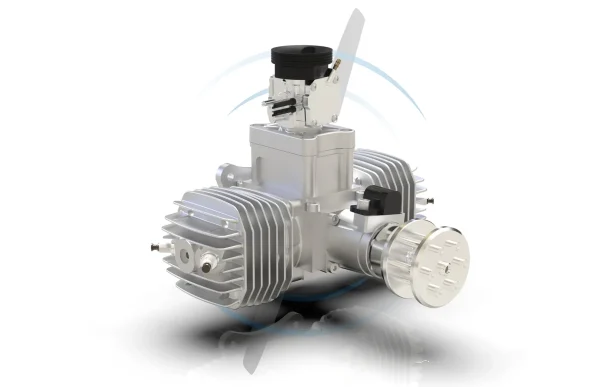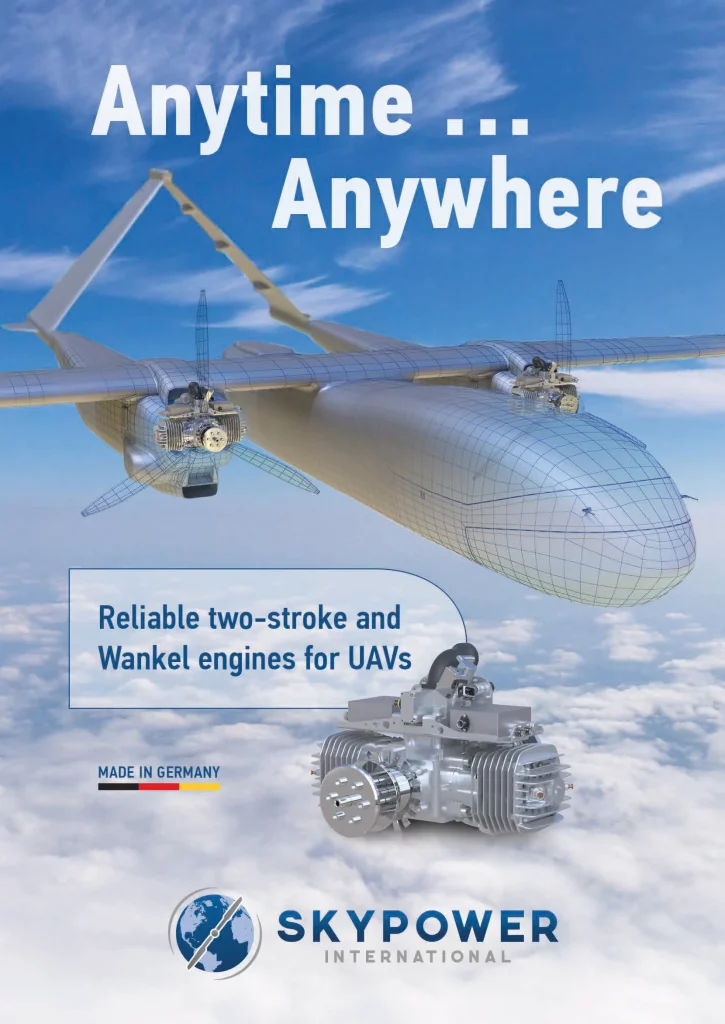

The selection of a suitable propulsion system is one of the most important decisions in unmanned aerial vehicle (UAV) development. Different aircraft configurations place different demands on engine performance, weight, fuel consumption, mechanical integration and operational reliability. Sky Power International develops and supplies combustion engine solutions for professional UAV applications. Depending on the aircraft architecture and technical requirements, these engines can be used in fixed-wing UAVs, vertical take-off and landing (VTOL) platforms, unmanned helicopters and hybrid multicopter systems.
However, not every engine is suitable for every aircraft configuration without modification. Successful integration depends on several factors, including the propulsion architecture, available installation space, power requirements, fuel type and intended mission profile. Understanding these requirements helps UAV manufacturers and system integrators identify the most appropriate engine configuration for their applications.
1. Compatibility with different UAV aircraft configurations
Different UAV platforms require different approaches to propulsion system integration. While combustion engines can provide important advantages in terms of energy density, endurance and payload capacity, their integration must be adapted to the specific aircraft architecture.
Fixed-wing UAVs are among the most established applications for combustion engine propulsion. These aircraft generate lift through their wings and typically use an engine-driven propeller to provide forward thrust. Combustion engines are particularly attractive for fixed-wing UAVs designed for long-range operations, extended flight durations and missions involving substantial payloads.
Key advantages include:
High energy density of liquid fuels
Potential for extended flight endurance and operational range
Suitability for continuous propulsion requirements
Flexible engine configurations for different aircraft sizes
Potential advantages for applications involving heavy mission equipment
Sky Power combustion engines can be considered for fixed-wing UAVs used in surveillance, mapping, surveying, cargo transportation and other professional applications. The appropriate engine configuration depends on aircraft weight, aerodynamic characteristics, propeller requirements and the intended operating conditions.
Vertical take-off and landing (VTOL) aircraft combine the ability to take off and land vertically with the operational capabilities of different flight configurations. Depending on the aircraft architecture, combustion engines can be integrated in several ways. In hybrid VTOL systems, a combustion engine may drive a generator that supplies electrical power to propulsion engines or supports onboard energy storage. Other VTOL configurations may use combustion engines for direct propulsion during forward flight, while electrically driven rotors provide vertical lift.
Potential benefits include:
- Extended mission endurance compared with some battery-only configurations
- Greater flexibility in propulsion architecture
- Support for long-range missions without conventional runways
- Potential improvements in payload and endurance capabilities
The suitability of a Sky Power engine depends on the specific VTOL design, including its power distribution system, transition strategy and propulsion requirements.
Unmanned helicopters require propulsion systems capable of supplying the power and torque needed to drive their rotor systems. Combustion engines can be suitable for helicopter UAVs, particularly when longer flight durations or higher payload capacities are required. However, successful integration requires careful consideration of the propulsion system, gearbox, rotor speed, vibration characteristics and engine operating range. Depending on the aircraft configuration, additional mechanical components may be necessary to adapt engine speed and torque to the rotor system.
Conventional multicopters typically rely on multiple electrically driven rotors because electric engines offer precise and rapid thrust control. Direct mechanical propulsion of several rotors through a single combustion engine is technically possible but introduces considerable propulsion system and control complexity. For this reason, combustion engines are particularly relevant to multicopters when used as part of a hybrid propulsion architecture. In such systems, the combustion engine drives a generator that supplies electrical energy to the rotor engines, potentially supported by a battery system. This configuration can be attractive for multicopter applications requiring extended endurance or increased payload capacity.
2. Mechanical integration and aircraft-specific requirements
One of the most important factors determining engine suitability is mechanical compatibility. An engine must fit within the aircraft’s available installation space while meeting structural, thermal and operational requirements.
Important considerations include:
Engine dimensions, mounting points and structural loads must be compatible with the aircraft design.
Engine speed, torque and power characteristics must match the selected propeller, transmission or generator system.
Engine mass and installation position influence aircraft balance, stability and overall flight performance.
Adequate cooling must be ensured throughout the intended flight envelope, including low-speed and hovering conditions where applicable.
Engine vibration must be considered to protect sensitive avionics, payloads and structural components.
Electrical connections, engine control, fuel delivery and monitoring interfaces must be integrated into the aircraft architecture.
Not every standard engine configuration will meet all these requirements directly. Sky Power therefore supports customers with project-specific engineering and adaptations to standard engine solutions. Through its project development services, Sky Power works with UAV manufacturers and system integrators to address specific propulsion requirements.

3. Matching engine performance to the UAV mission
The suitability of a combustion engine is not determined solely by the aircraft type. The intended mission profile plays an equally important role. For example, a fixed-wing surveillance UAV designed for extended flight durations has different propulsion requirements from a heavy-lift cargo UAV or a hybrid multicopter operating with frequent load changes. Important selection criteria include engine power, torque, fuel consumption, operating speed, power-to-weight ratio and endurance requirements.
Long-endurance surveillance and reconnaissance
For UAVs operating over extended periods, fuel efficiency and reliable continuous engine operation are particularly important. Combustion engines can offer advantages because liquid fuels provide high energy density compared with current battery technologies. This makes them attractive for long-endurance surveillance, reconnaissance and monitoring applications.
Cargo and heavy-payload UAVs
Transport UAVs must balance payload capacity, propulsion system weight, available power and operational range. Combustion engines can be suitable for these applications, particularly when substantial energy reserves are required for longer missions. The engine must nevertheless be matched to the complete aircraft design, including maximum take-off weight, required thrust and operating conditions.
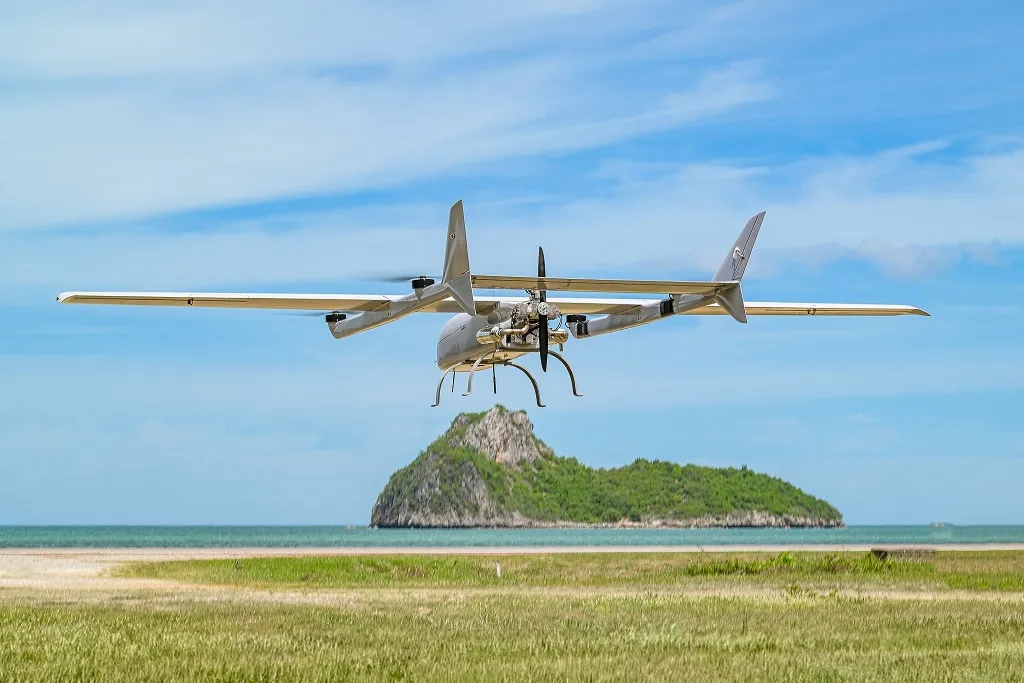
Industrial surveying and mapping
Surveying, mapping and infrastructure inspection missions often require predictable engine performance and sufficient endurance to cover large operational areas. Combustion propulsion can provide an attractive solution for UAVs operating over long distances or in remote regions where frequent battery charging is impractical.
4. Fuel compatibility and operational requirements
Fuel selection is another important consideration when integrating combustion engines into UAV platforms. Sky Power offers engine solutions designed for different fuel requirements, including gasoline and specific heavy-fuel applications. Depending on the engine configuration, compatible fuels may include gasoline-based fuels or aviation-related heavy fuels such as JP-5 and JP-8. However, fuel compatibility must always be verified for the specific engine model.
Important factors include:
- Availability of the required fuel in the intended operating region
- Fuel storage and handling requirements
- Compatibility with the engine and fuel delivery system
- Mission-specific fuel consumption
- Applicable operational and safety requirements
Fuel selection can be especially important for military, governmental and remote-area applications where fuel standardization or logistics influence procurement decisions.
5. Environmental conditions and operational reliability
Professional UAV systems are frequently required to operate under challenging environmental conditions. Temperature extremes, changing atmospheric pressure, humidity, dust and marine environments can influence propulsion system performance and reliability. Combustion engines intended for these applications must be appropriately configured and validated for the expected operating conditions.
High and Low Temperatures
Extreme temperatures can affect starting behavior, fuel delivery, lubrication and engine cooling. Depending on the engine configuration, electronic fuel injection and engine management can help adapt fuel delivery to changing environmental conditions. However, appropriate thermal management and application-specific validation remain essential.
High-altitude operations
At higher altitudes, decreasing air density affects combustion and available engine power. Engine selection must therefore account for the intended operating altitude and the associated performance limitations. Electronic fuel injection can support mixture adaptation, but it cannot eliminate the fundamental effects of reduced oxygen availability.
Marine and coastal environments
UAVs operating near the sea may be exposed to salt, moisture and corrosive environmental conditions. Suitable corrosion protection, installation design and maintenance procedures are important for ensuring reliable propulsion system operation.
Dry and dusty environments
Operations in deserts and other dry environments can place additional demands on air filtration, cooling and maintenance. Engine and aircraft integration must account for these conditions to protect critical components.
6. Noise, emissions and operational restrictions
Although combustion engines offer important advantages in terms of endurance and energy density, they are not suitable for every UAV application. Noise is an important consideration, particularly in urban environments or missions requiring a low acoustic signature. Combustion engines generate mechanical and exhaust noise, while propellers and rotor systems contribute additional aerodynamic noise. For applications involving low-altitude urban operations, noise-sensitive environments or missions with strict acoustic requirements, battery-electric propulsion may be more suitable. Emissions, vibration and regulatory requirements must also be considered during propulsion system selection. Consequently, the optimal solution depends on the operational priorities of the aircraft rather than on engine performance alone.
7. When is a combustion engine the right choice?
Combustion propulsion is particularly attractive when UAV applications require a combination of endurance, payload capability and operational flexibility.
Typical applications include:
- Long-range fixed-wing UAVs
- Long-endurance surveillance and reconnaissance aircraft
- Cargo and heavy-payload UAVs
- Hybrid VTOL platforms
- Hybrid multicopter systems
- Unmanned helicopters with suitable propulsion system architecture
- Industrial UAVs operating in remote environments
For very small aircraft, short-duration missions or applications where low noise and minimal mechanical complexity are essential, fully electric propulsion may be the more appropriate choice.
8. Sky Power International: Propulsion solutions for different UAV architectures
Sky Power International supports UAV manufacturers and system integrators in selecting combustion engine solutions for different aircraft architectures and mission requirements. Its engine portfolio includes propulsion solutions for direct applications as well as configurations that can be integrated into hybrid propulsion and onboard power generation concepts. Where standard engine configurations do not meet the requirements of a specific aircraft, project-specific adaptations can be considered.
The selection process involves evaluating engine performance, installation requirements, fuel compatibility, environmental conditions and the overall propulsion architecture. This approach enables UAV developers to select an engine configuration based on the requirements of the complete aircraft system rather than on individual engine specifications alone.
Explore the Sky Power International engine portfolio or learn more about our project development services.
Our team can help you evaluate the technical requirements of your UAV platform and identify suitable engine configurations for your next development project.