
New Technical Paper: UAV Propulsion Systems for Agriculture

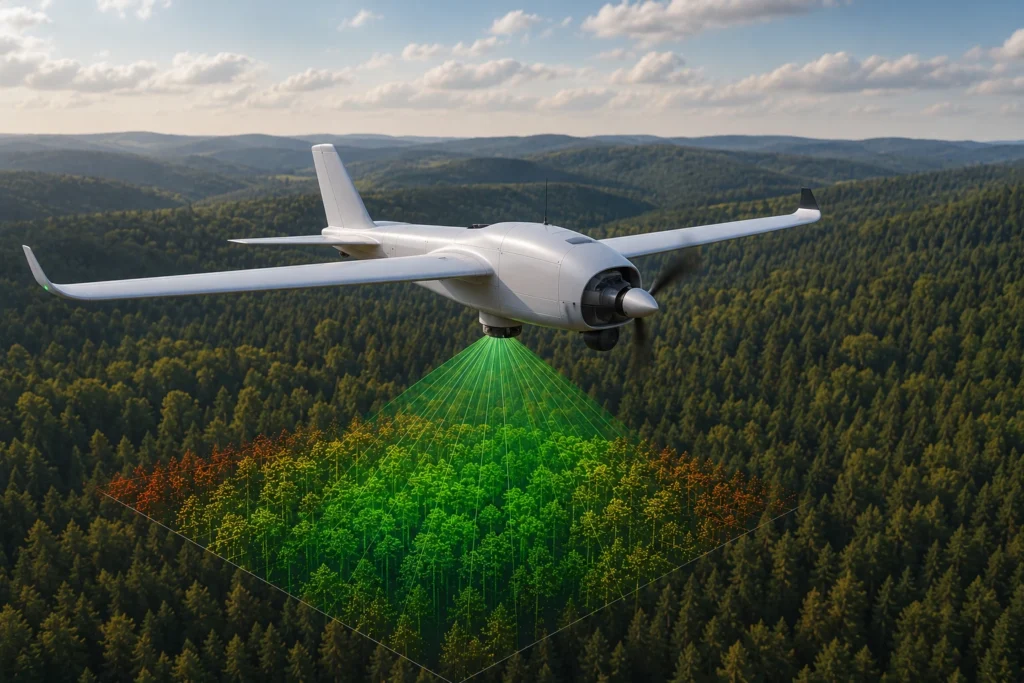
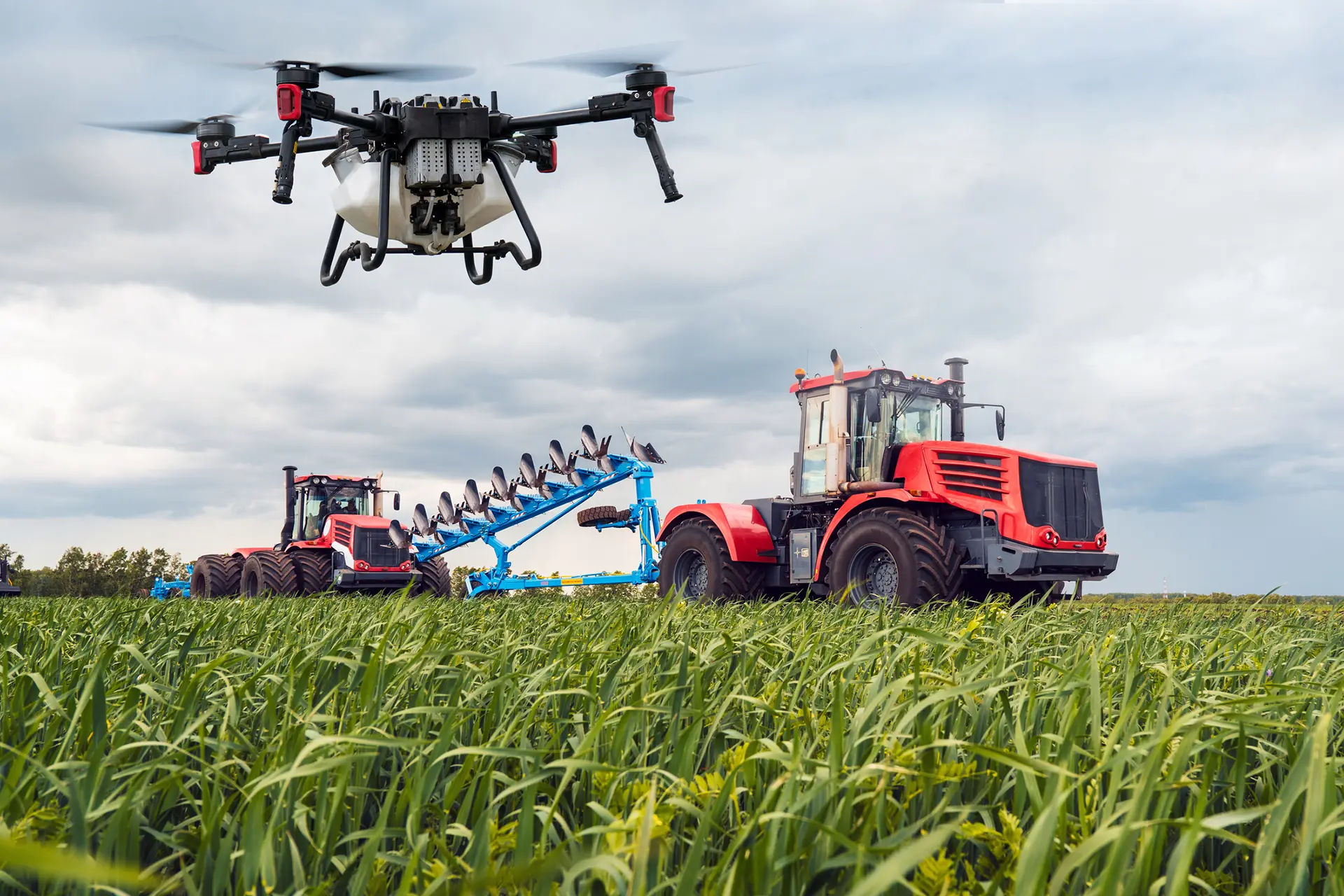
Unmanned aerial vehicles are becoming an important tool in modern agriculture. While UAVs were initially used mainly for aerial imaging and crop monitoring, professional platforms now support a much wider range of tasks, including multispectral and LiDAR surveys, precision spraying, seeding, transport and livestock monitoring.

These applications place higher demands on the complete UAV system. Payloads are increasing, missions are becoming longer and autonomous BVLOS operations require high reliability and operational availability. As a result, the propulsion system is becoming a key factor in the performance and economic viability of professional agricultural UAVs.

Our new technical paper “UAVs with combustion engines in agriculture” explains which requirements modern agricultural UAV applications place on propulsion systems today and in the future.

Why the mission profile matters
Dekoratives Bild

There is no single ideal propulsion system for every agricultural UAV. The decisive factor is the specific mission profile.

Mapping and surveying UAVs often operate for long periods at relatively constant power levels. Crop-spraying drones must handle changing loads as liquid payloads are discharged during flight. Transport UAVs require high continuous power and sufficient reserves during takeoff and climb.

The paper explains why propulsion systems should not be selected solely based on maximum power. Engine design, power reserves, efficiency, thermal management, vibration characteristics and fuel supply must be considered as part of the complete UAV system.

When combustion engines can offer advantages

Battery-electric propulsion systems are widely used in UAV applications. However, increasing payloads, longer flight times, large operational areas and intensive daily use can create requirements where combustion-engine propulsion concepts offer technical advantages.

For professional agricultural operators, short refueling times can help reduce downtime and increase daily flight performance. At the same time, sufficient power reserves are essential for reliable operation under changing environmental conditions, high temperatures, varying altitudes or strong winds.

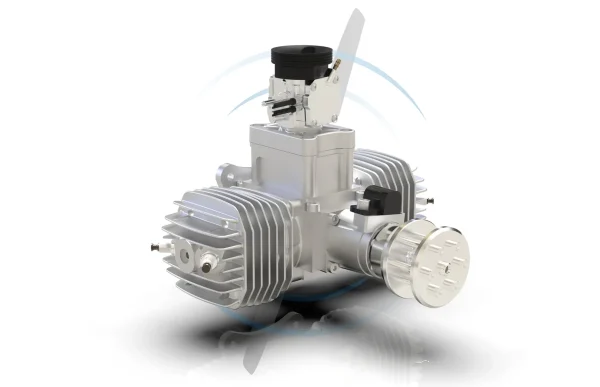
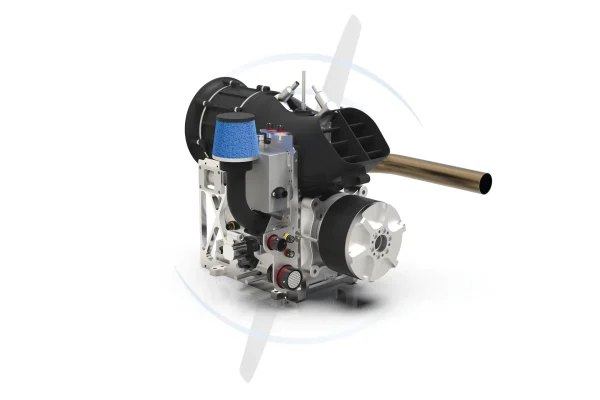
The paper also examines the requirements placed on modern two-stroke UAV engines, including power-to-weight ratio, thermal stability, vibration behavior and the influence of carburetor and electronic fuel injection systems.

Download the technical paper

The new Sky Power technical paper provides technical insights into these questions and examines the requirements that current and future agricultural UAV applications place on their propulsion systems.
Dekoratives Bild
Dekoratives Bild

Combustion engines can be useful when agricultural UAVs require longer flight times, higher payloads, short refueling times or reliable operation across large areas and changing environmental conditions.

Dekoratives Bild

Different agricultural UAV missions create different power requirements. Surveying UAVs often need stable endurance, spraying drones must handle changing payloads and transport UAVs require high continuous power and reserves during takeoff and climb.

Dekoratives Bild

The propulsion system directly influences payload capacity, flight time, operational reliability and economic efficiency. This is especially important when agricultural UAVs are used for spraying, surveying, transport or BVLOS operations.

Related news and blog articles

Published: August 25, 2026
SP-110 TS (mit Rotorgraphik) News

New Technical Paper: Carburetor or Electronic Fuel Injection for UAV Engines?

Sky Power’s new technical paper explains how carburetors and electronic fuel injection systems influence efficiency, reliability and performance in high-performance two-stroke UAV engines.
Read more
Published: August 10, 2026
210_HFE_XR.532 (mit Rotorgraphik)

New technical paper: Hybrid UAV Propulsion Systems for Longer Missions

Battery-powered UAVs are efficient, but their endurance is limited by battery energy density. Sky Power’s new technical paper explains how hybrid UAV propulsion systems can extend range, increase payload capacity and open new possibilities for VTOL, ISR, BVLOS and heavy-lift applications.
Read more
Published: July 3, 2026
Long Range UAV

New Paper: Why Long-Range UAVs Still Need Combustion Engines

As UAV missions demand longer flight times, greater range, and higher payload capacities, combustion engines continue to offer significant advantages over battery-powered systems. Learn why internal combustion and hybrid propulsion technologies remain critical for long-endurance UAV applications.
Read more
Published: June 23, 2026
Two-Stroke vs. Wankel Engines for UAVs

New Paper: Push or Pull Configuration in UAVs – Which Approach Delivers the Best Performance?

The positioning of a UAV propeller has a significant impact on flight performance, engine cooling, sensor integration and overall system reliability. Discover the key differences between push and pull configurations in Sky Power International’s latest white paper.
Read more
Published: June 16, 2026
Sky Power equips Nimkii 42-S from Sky Canoe with propulsion units #3

Two-Stroke vs. Wankel Engines for UAVs: Which Propulsion Technology Fits the Mission?

We have published a new technical paper comparing two-stroke and Wankel UAV engines. The paper analyzes propulsion technologies for ISR, tactical and long-range unmanned aerial systems.
Read more
Published: April 14, 2026
XPONENTIAL USA

Sky Power International will be showcasing advanced UAV propulsion systems at XPONENTIAL USA

Sky Power presents high-performance UAV propulsion systems at XPONENTIAL USA 2026, focusing on efficiency, endurance, and reliability.
Read more
Skypower brochure cover

Sky Power brochure

Download our newest brochure for free.

Please fill in the fields below to receive an E-Mail containing the brochure download link.

Company name
Full name
Email address (business)
Phone number (optional)
Country
Privacy policy
Newsletter
Position: 0
Slide to 5 to confirm you’re human.