
Selecting the right propulsion system is a critical decision in UAV development. Beyond engine power, weight and fuel consumption, the fuel delivery system plays an important role in determining how reliably an unmanned aerial vehicle performs under changing operating conditions.
While carburetor-based combustion engines remain a proven solution for many UAV applications, engines equipped with electronic fuel injection (EFI) offer additional advantages, particularly for missions involving varying altitudes, demanding environmental conditions, heavy payloads or extended flight durations. But when does electronic fuel injection become the better choice?
1. Improved fuel efficiency and engine performance
One of the main advantages of electronic fuel injection is the precise control of the fuel-air mixture. Unlike conventional carburetor systems, EFI uses electronically controlled fuel delivery to adjust the amount of fuel supplied to the engine according to operating conditions. This enables more accurate mixture management and can improve combustion efficiency, throttle response and fuel consumption.- More precise fuel delivery across different operating conditions
- Potentially lower fuel consumption and improved mission endurance
- Consistent engine performance during changing load conditions
- Better adaptation to variations in altitude and air density
Altitude compensation is particularly important for UAVs operating across different flight levels. As altitude increases, atmospheric pressure and air density decrease. A properly calibrated EFI system can compensate for these changes, helping maintain a suitable fuel-air mixture and more consistent engine operation. For UAVs performing surveillance, mapping or long-range missions, this adaptability can provide a significant operational advantage.
2. Greater reliability under changing environmental conditions
UAV propulsion systems must frequently operate under conditions that differ considerably from those experienced during ground testing. Temperature variations, changing atmospheric pressure and demanding mission environments can influence combustion quality and engine behavior. Electronic fuel injection systems can use sensor data and electronic engine management to adjust fuel delivery in response to these changes.

Appropriate fuel enrichment and electronic control can support more reliable engine starts at low temperatures.
Precise fuel management can contribute to smoother and more stable engine operation at low engine speeds.
EFI can compensate for changes in temperature and atmospheric pressure within the system's calibrated operating range.
For UAV manufacturers developing platforms for different geographic regions and environmental conditions, these capabilities can reduce the need for manual fuel-system adjustments and support operational consistency.
3. Optimized performance for different UAV mission profiles
Not every UAV mission places the same demands on its propulsion system. A surveillance drone designed for extended flight durations has different requirements from a heavy-lift UAV transporting equipment or a hybrid platform combining combustion and electric propulsion. Electronic fuel injection provides additional flexibility when adapting engine operation to specific mission profiles.
Long-endurance UAV missions
For UAVs designed to remain airborne for extended periods, fuel efficiency is a key factor influencing operational range and endurance. By precisely managing fuel delivery, EFI can help optimize fuel consumption at relevant operating points, potentially extending flight time without increasing fuel capacity.
Heavy-payload and cargo UAVs
Cargo UAVs and heavy-lift platforms may experience substantial changes in engine load during operation. An appropriately calibrated EFI system can support consistent fuel delivery and engine response under varying load conditions. This is particularly relevant for UAVs transporting cargo, industrial equipment or specialized mission payloads.
Hybrid UAV propulsion systems
Hybrid UAVs combine combustion engines with electric propulsion components or onboard power generation. In these applications, electronic engine management can support operation at defined engine speeds and loads, helping optimize the combustion engine’s contribution to the overall propulsion architecture. EFI can therefore be a valuable component in the development of efficient hybrid propulsion concepts.
Alternative fuel requirements
Electronic fuel injection can also offer advantages when developing engines for specific fuel requirements. Depending on the engine design, fuel system components and calibration, EFI may support operation with different approved fuel formulations. However, compatibility with fuels such as kerosene or heavy-fuel blends requires an engine and injection system specifically designed and validated for those fuels. Electronic injection alone does not establish multi-fuel capability.
4. Potential reduction in fuel consumption and emissions
Efficient combustion is not only relevant for UAV endurance but can also influence exhaust emissions. By controlling fuel delivery more precisely, electronic fuel injection can help reduce unnecessarily rich operating conditions and improve combustion consistency. Depending on engine design, calibration and operating conditions, this may reduce fuel consumption and certain exhaust emissions.
For UAV manufacturers developing propulsion systems for applications with specific efficiency or environmental requirements, EFI can therefore provide additional optimization opportunities. Actual emission performance must nevertheless be evaluated for the complete engine system and its intended operating profile.
5. Improved engine monitoring and diagnostics
Another important advantage of modern electronic fuel injection systems is the integration of electronic engine control units (ECUs). Depending on the system configuration, an ECU can collect and process operational data such as engine speed, temperature, throttle position and fuel-system parameters. This information can support engine monitoring, troubleshooting and maintenance planning.
- Improved visibility into engine operating conditions
- Faster identification of abnormal operating parameters
- Support for preventive maintenance strategies
- More systematic analysis of engine performance
- Easier integration of propulsion data into UAV monitoring architectures, where supported
These capabilities are particularly valuable for professional UAV operations where engine reliability, repeatability and traceability are important.
6. When is a carburetor-based UAV engine still a good choice?
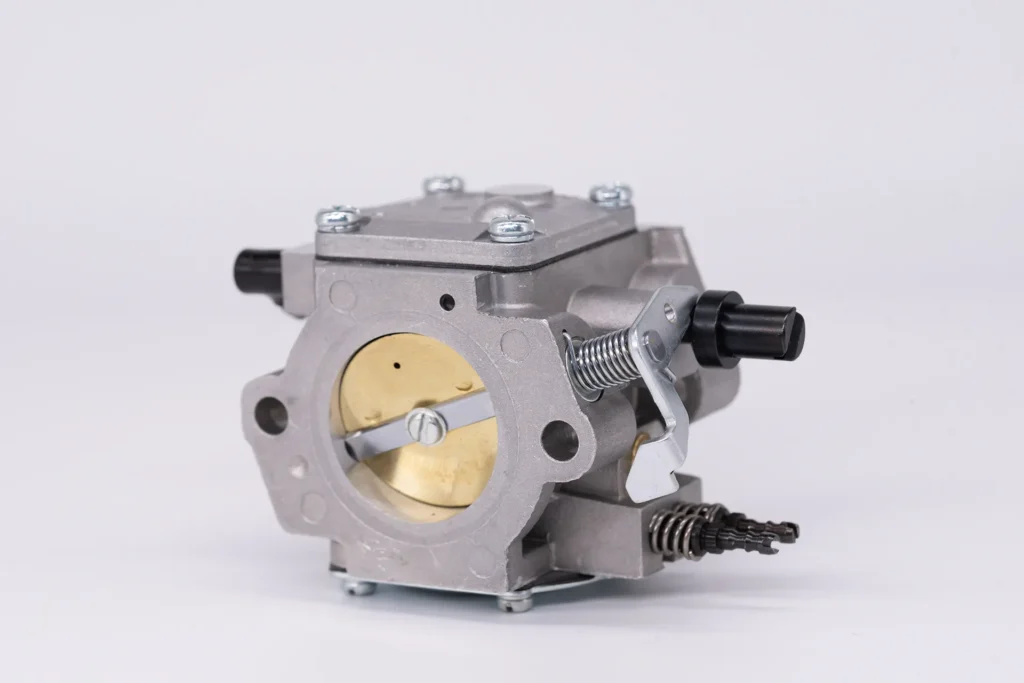
Although EFI provides several technical advantages, carburetor-based engines remain a practical solution for many UAV applications. Their comparatively simple architecture, lower electronic complexity and potentially lower system costs can make them attractive for UAVs operating under relatively stable environmental conditions. For applications with limited altitude variation, predictable operating profiles and straightforward maintenance requirements, a carburetor-based engine may provide the necessary performance without the additional components associated with electronic injection. The decision should therefore be based on the complete mission profile rather than on the fuel delivery technology alone.
7. Sky Power International: Fuel injection solutions for demanding UAV applications
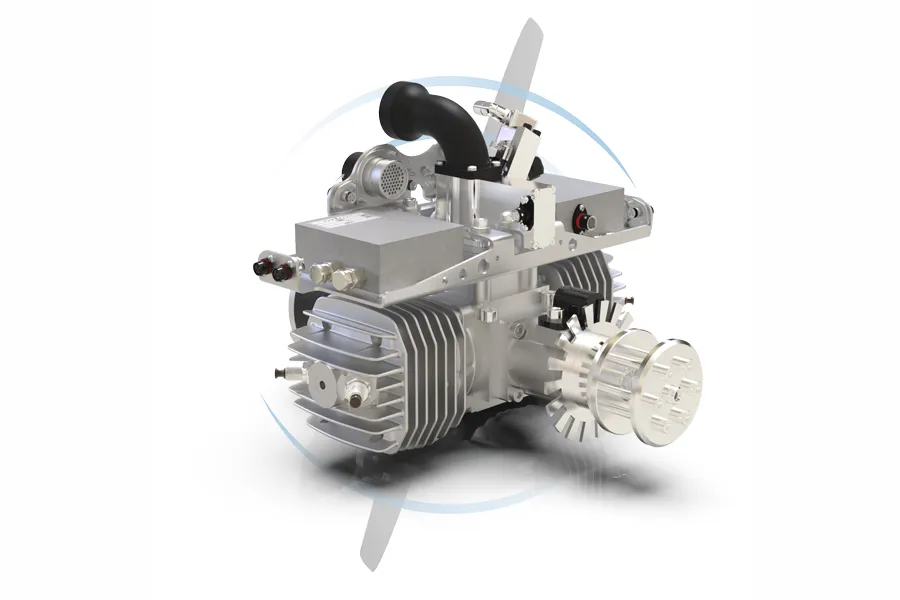
Sky Power International develops and supplies combustion engine solutions for professional unmanned aerial systems, including engine configurations with electronic fuel injection. With experience in UAV propulsion technology, Sky Power supports manufacturers and system integrators in selecting suitable engine configurations for their specific requirements.
Whether the application involves long-endurance surveillance, cargo transportation, hybrid propulsion or operations under changing environmental conditions, the selection of the appropriate fuel delivery system is an important part of propulsion system engineering. The objective is not simply to achieve maximum engine output, but to identify the most suitable balance between performance, efficiency, reliability, system complexity and mission requirements.
Explore the UAV engine portfolio from Sky Power International and discover engine configurations designed for demanding unmanned aviation applications. Contact our team to discuss the propulsion requirements of your next UAV project.