
New Paper: Why Long-Range UAVs Still Need Combustion Engines

Understanding the Role of Internal Combustion Engines in Long-Endurance UAV Missions

Electric propulsion systems continue to gain importance in the UAV industry. However, when it comes to long-range missions, extended flight times, heavy payloads, and operation in remote environments, internal combustion engines remain a critical technology.

In its latest paper, Sky Power International examines the limitations of battery-powered UAVs and explains why combustion engines continue to play a key role in modern long-range drone architecture. The paper explores topics such as energy density, flight endurance, payload capacity, thermal management, and operational independence in demanding mission scenarios.

Readers will also gain valuable insights into the growing importance of hybrid UAV propulsion systems, where combustion engines serve as generators or range extenders to combine the benefits of electric and fuel-powered technologies.

Whether for ISR missions, BVLOS operations, border surveillance, maritime reconnaissance, logistics applications, or defense platforms, the white paper highlights why advanced two-stroke, Wankel, and hybrid propulsion systems remain essential for achieving maximum range, reliability, and mission effectiveness.

Download the technical paper

Learn why internal combustion and hybrid propulsion systems remain essential for long-range UAV missions, extended flight times and demanding payload requirements.
Dekoratives Bild
Dekoratives Bild

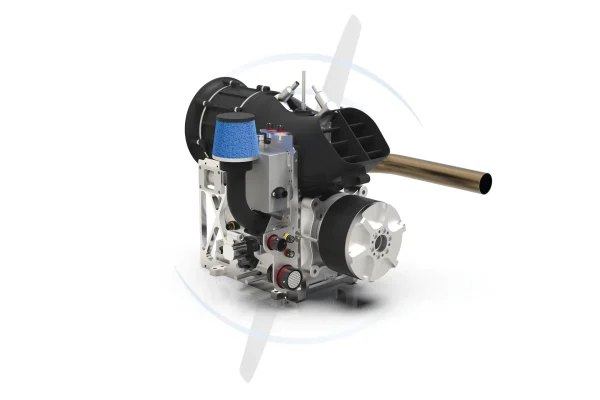
Hybrid UAV propulsion systems combine the endurance of combustion engines with the control benefits of electric drives. In these architectures, Sky Power engines can support long-range operation as a primary propulsion system, generator or range extender, depending on the UAV platform and mission profile.

Dekoratives Bild

For long-endurance UAV missions, combustion engines currently offer clear advantages over purely battery-electric systems. Sky Power develops UAV propulsion solutions that support longer operating times, fast refueling and stable performance in remote, cold or mission-critical environments.

Dekoratives Bild

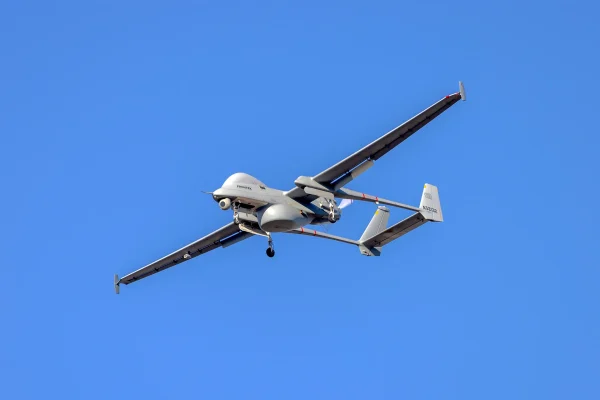
Battery-powered UAVs are limited by battery weight, charging time, usable energy capacity and temperature sensitivity. For demanding BVLOS, ISR or surveillance missions, Sky Power combustion engines provide a practical alternative when endurance, payload capacity and operational independence are critical.

Dekoratives Bild

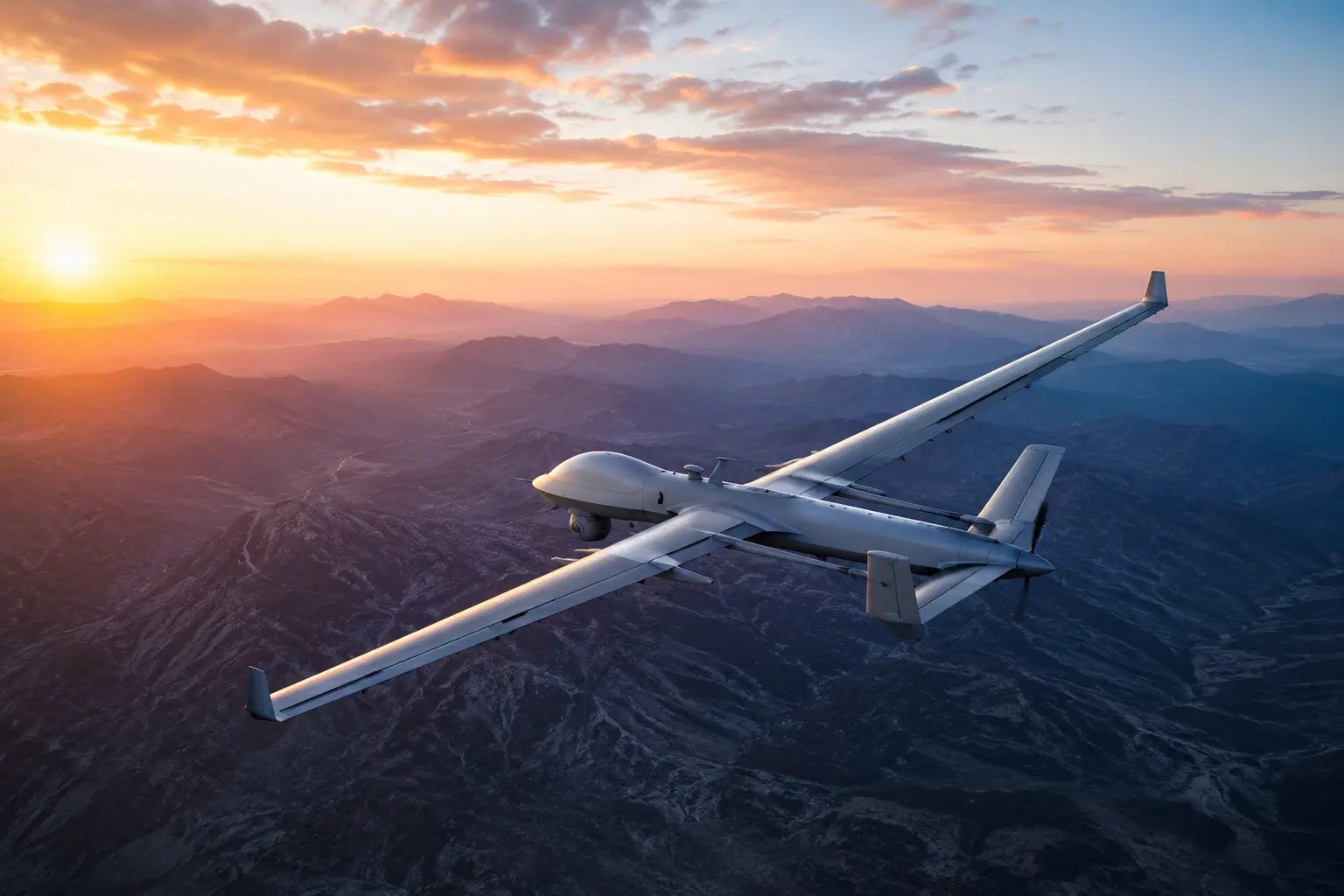
Long-range drones need combustion engines because liquid fuels provide significantly higher energy density than current battery systems. Sky Power UAV engines are designed for missions that require long flight times, extended range and reliable onboard power for sensors, communication systems and payloads.

Related news and blog articles

Published: October 2, 2026
Nimkii

New Technical Paper: How Range and Payload Shape Cargo Drone Propulsion

How do payload, range and mission profile shape cargo drone propulsion? Sky Power’s new technical paper explains the key factors behind propulsion selection.
Read more
Published: September 16, 2026
Keyende IM X

Sky Power invests in expansion of its quality assurance capabilities

Sky Power is expanding its quality assurance capabilities with new measuring technology. Automated and reproducible component inspection enables precision-critical components to be checked from the incoming inspection stage onwards.
Read more
Published: September 3, 2026
UAVs with combustion engines in agriculture 1

New Technical Paper: UAV Propulsion Systems for Agriculture

Agricultural UAVs require longer flight times, higher payloads and reliable propulsion systems. Sky Power’s new paper examines the requirements for modern UAV engines in professional agriculture.
Read more
Published: August 25, 2026
SP-110 TS (mit Rotorgraphik) News

New Technical Paper: Carburetor or Electronic Fuel Injection for UAV Engines?

Sky Power’s new technical paper explains how carburetors and electronic fuel injection systems influence efficiency, reliability and performance in high-performance two-stroke UAV engines.
Read more
Published: August 10, 2026
210_HFE_XR.532 (mit Rotorgraphik)

New technical paper: Hybrid UAV Propulsion Systems for Longer Missions

Battery-powered UAVs are efficient, but their endurance is limited by battery energy density. Sky Power’s new technical paper explains how hybrid UAV propulsion systems can extend range, increase payload capacity and open new possibilities for VTOL, ISR, BVLOS and heavy-lift applications.
Read more
Published: June 23, 2026
Two-Stroke vs. Wankel Engines for UAVs

New Paper: Push or Pull Configuration in UAVs – Which Approach Delivers the Best Performance?

The positioning of a UAV propeller has a significant impact on flight performance, engine cooling, sensor integration and overall system reliability. Discover the key differences between push and pull configurations in Sky Power International’s latest white paper.
Read more
Skypower brochure cover

Sky Power brochure

Download our newest brochure for free.

Please fill in the fields below to receive an E-Mail containing the brochure download link.

Company name
Full name
Email address (business)
Phone number (optional)
Country
Privacy policy
Newsletter
Position: 0
Slide to 5 to confirm you’re human.