
Two-Stroke vs. Wankel Engines for UAVs: Which Propulsion Technology Fits the Mission?

Choosing the right propulsion system is one of the most important technical decisions in UAV development. Flight endurance, payload integration, vibration behavior, operational reliability, maintenance effort and lifecycle costs all depend closely on the selected engine concept.

To support this decision-making process, we have published a new technical paper: “Two-stroke vs. Wankel engines for UAVs: Which propulsion technology is most suitable for the respective mission profile?”

The paper compares classic Two-Stroke UAV engines with modern Wankel Engines for UAVs and shows why propulsion technology should never be evaluated by engine data alone. For UAV developers and system architects, the decisive question is how the engine affects the complete platform, from mechanical integration and vibration behavior to payload stability and operational efficiency.

Why Engine Architecture Matters in UAV Development

In unmanned aerial systems, the propulsion system influences far more than thrust or output power. It affects how the UAV is designed, how payloads are integrated, how maintenance concepts are planned and how reliably the system performs during operation.

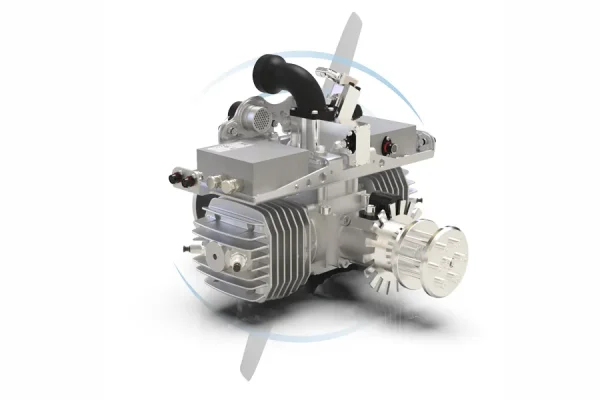
While Two-Stroke engines are often associated with robustness, strong power-to-weight ratio, and scalable platform concepts, Wankel Engines can offer advantages in compact integration and smooth running behavior, especially in applications with vibration-sensitive payloads.

Which concept is better depends strongly on the mission profile. ISR operations, long-endurance flights, payload-intensive platforms and defense applications can all place very different demands on the propulsion system.

A System-Level Comparison for Technical Decision-Makers

Our new paper takes a practical engineering perspective. It does not simply compare technical specifications. Instead, it looks at how Two-Stroke and Wankel Engines influence the complete UAV system.

The paper addresses key questions such as:

  • How does engine architecture affect UAV integration?
  • Which propulsion concept supports vibration-sensitive sensor payloads?
  • What role do maintenance strategy and lifecycle costs play?
  • How should UAV manufacturers evaluate propulsion technology according to mission profile?

As a manufacturer of both advanced Two-Stroke and Wankel UAV engines, we provides a balanced view on the strengths and application areas of both technologies.

Download the technical paper

Discover how Two-Stroke and Wankel engines differ in terms of UAV integration, vibration behavior, maintenance requirements and mission-specific performance. The paper provides UAV developers, system architects and aerospace engineers with a system-level perspective for evaluating the right propulsion concept for different mission profiles.

Dekoratives Bild

The propulsion system can affect endurance, payload stability, vibration levels, maintenance planning, lifecycle costs, and overall platform design. The whitepaper examines these factors in detail.

Dekoratives Bild

Two-Stroke engines are widely used in UAV propulsion because they can offer a strong combination of robustness, power density, scalability, and practical maintainability.

Dekoratives Bild

Wankel Engines can be attractive for UAV applications where compact design and smooth running behavior are important, especially for vibration-sensitive payloads.

Dekoratives Bild

There is no universal answer. The right engine depends on mission profile, payload requirements, endurance targets, integration concept, and operational strategy.

Dekoratives Bild

Two-Stroke and Wankel Engines differ mainly in their architecture, operating principle, vibration behavior, packaging, and maintenance characteristics. The whitepaper explains how these differences affect UAV integration and mission performance.

Related news and blog articles

Published: November 18, 2026
MADDOS VTOL 600h
Insights

Can Sky Power engines be used in all types of UAV aircraft?

Can combustion engines power every type of UAV? Discover how Sky Power propulsion solutions can be integrated into fixed-wing aircraft, VTOL platforms, helicopters and hybrid multicopters, and which technical requirements determine the right engine configuration.
Read more
Published: November 12, 2026
SP-110 FI TS (mit Rotorgraphik) 3 zu 2
Insights

When should you use an engine with electronic fuel injection for your UAV?

Electronic fuel injection offers significant advantages for demanding UAV applications. Discover how EFI can improve fuel management, altitude adaptability, engine reliability and mission performance – and when it is the right choice for your UAV.
Read more
Published: November 4, 2026
gas-systems-detail
Insights

How do I know when to change the spark plug in my UAV engine?

Worn spark plugs can affect UAV engine performance, fuel efficiency and operational reliability. Discover the warning signs, learn how to inspect spark plug condition and find out when replacement is necessary to keep your UAV engine running reliably.
Read more
Published: October 2, 2026
Nimkii
Insights

New Technical Paper: How Range and Payload Shape Cargo Drone Propulsion

How do payload, range and mission profile shape cargo drone propulsion? Sky Power’s new technical paper explains the key factors behind propulsion selection.
Read more
Published: September 16, 2026
Keyende IM X
News

Sky Power invests in expansion of its quality assurance capabilities

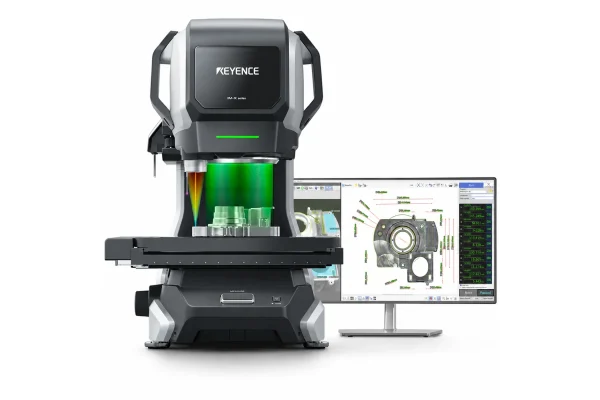
Sky Power is expanding its quality assurance capabilities with new measuring technology. Automated and reproducible component inspection enables precision-critical components to be checked from the incoming inspection stage onwards.
Read more
Published: September 3, 2026
UAVs with combustion engines in agriculture 1
Insights

New Technical Paper: UAV Propulsion Systems for Agriculture

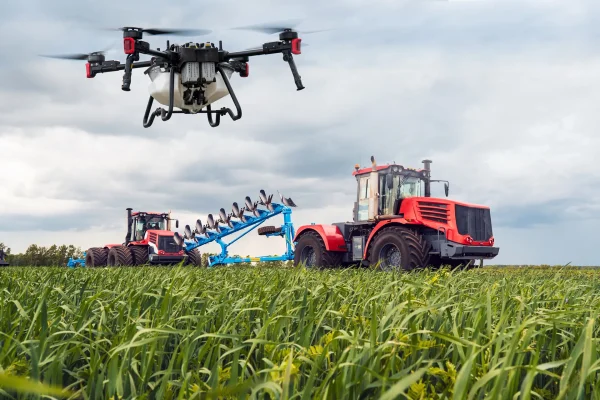
Agricultural UAVs require longer flight times, higher payloads and reliable propulsion systems. Sky Power’s new paper examines the requirements for modern UAV engines in professional agriculture.
Read more

Table of contents

Skypower brochure cover

Sky Power brochure

Download our newest brochure for free.

Please fill in the fields below to receive an E-Mail containing the brochure download link.

Company name
Full name
Email address (business)
Phone number (optional)
Country
Privacy policy
Newsletter
Position: 0
Slide to 5 to confirm you’re human.