
New Technical Paper: How Range and Payload Shape Cargo Drone Propulsion

Cargo drones are becoming an important solution for industrial logistics, remote supply, offshore applications, humanitarian missions and other demanding transport tasks. As payload and range increase, the requirements placed on the propulsion and energy system also rise.

This relationship is the focus of the new Sky Power International technical paper “Cargo drones: Why range and payload determine the propulsion system.” The paper explains why propulsion concepts for cargo UAVs should not be selected based on maximum power alone, but on the complete mission profile.

Payload and range as key factors in cargo UAV design

When designing a cargo UAV, maximum payload and maximum range cannot be evaluated in isolation. The decisive question is how much payload must be transported, over what distance and under which operating conditions.

Higher payload increases the overall weight of the aircraft and therefore the required propulsion power and energy. Greater range requires additional energy on board, which also adds weight. This makes the payload-range relationship one of the most important factors when selecting and dimensioning the propulsion system.


For short missions with comparatively low payloads, battery-electric propulsion systems can offer significant advantages. As flight duration, range and payload increase, however, the relationship between stored energy and system weight becomes increasingly important. In these cases, fuel-based propulsion concepts can become particularly relevant for long-range cargo UAVs.

From direct propulsion to hybrid architecture
Dekoratives Bild

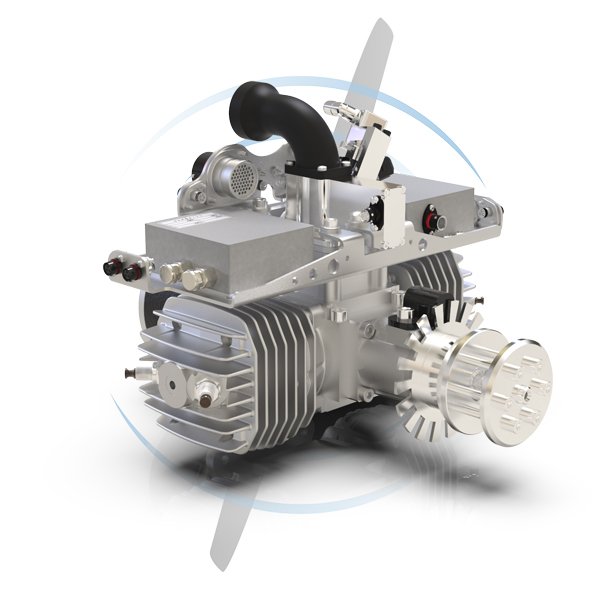
The technical paper examines different propulsion architectures for professional cargo drones. These include direct mechanical propulsion with an internal combustion engine as well as hybrid concepts in which an internal combustion engine drives a generator.

The generated electrical energy can then supply electric propulsion motors and other onboard systems. This type of architecture can be especially relevant for VTOL cargo drones, where vertical take-off and landing require high peak power, while efficient cruise flight often requires significantly less continuous power.

A hybrid system can therefore combine battery power for short-term peak loads with fuel-based continuous power generation for longer flight durations.

Why the mission profile determines the propulsion concept

One of the key conclusions of the technical paper is that cargo UAV development should not start with the question of which engine provides the highest maximum power. Instead, the mission profile should define the propulsion concept.

Important factors include:

  • payload
  • required distance
  • flight duration
  • VTOL capability
  • safety and energy reserves
  • onboard electrical power requirements
  • environmental conditions


Together, these factors determine the performance requirements of the aircraft and the appropriate propulsion architecture.

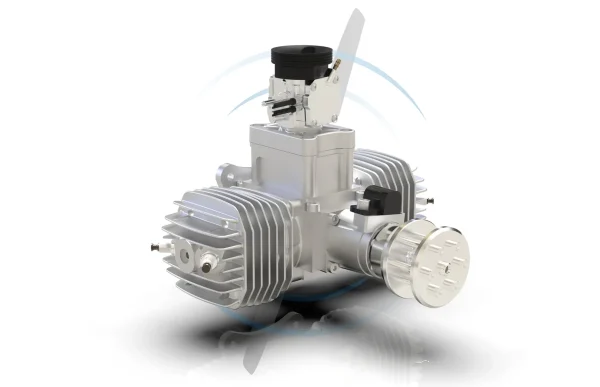
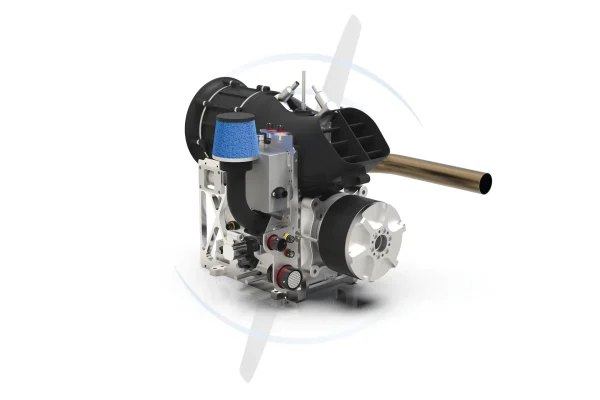
Sky Power International develops two-stroke boxer and Wankel engines for professional UAV applications. Depending on the aircraft architecture and mission requirements, these propulsion solutions can be integrated for direct propulsion, hybrid propulsion or generator operation.

Download the technical paper

The complete Sky Power technical paper “Cargo drones: Why range and payload determine the propulsion system” is now available for download. It explains how payload, range and mission requirements influence the right propulsion architecture for professional cargo UAVs.
Dekoratives Bild
Dekoratives Bild

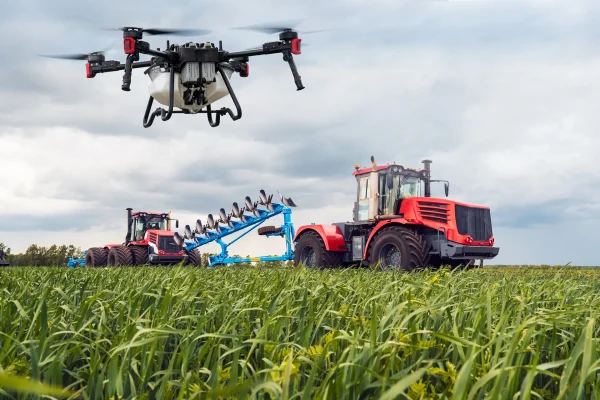
VTOL cargo drones require high peak power during vertical take-off and landing, while cruise flight often needs less continuous power. Hybrid architectures can combine battery power for short-term peak loads with fuel-based continuous power generation for longer missions.

Dekoratives Bild

Fuel-based propulsion concepts can become relevant when cargo UAVs require longer flight durations, greater range or higher payload capacity. As mission requirements increase, the ratio between stored energy and system weight becomes a decisive design factor.

Dekoratives Bild

Battery-electric propulsion can be suitable for shorter missions with comparatively low payloads. In these applications, electric propulsion can offer significant advantages, especially when flight duration and energy demand remain within practical limits.

Dekoratives Bild

Payload and range directly influence the required propulsion power, energy demand and overall aircraft weight. The higher the payload and the longer the required distance, the more carefully the propulsion and energy system must be dimensioned.

Related news and blog articles

Published: September 16, 2026
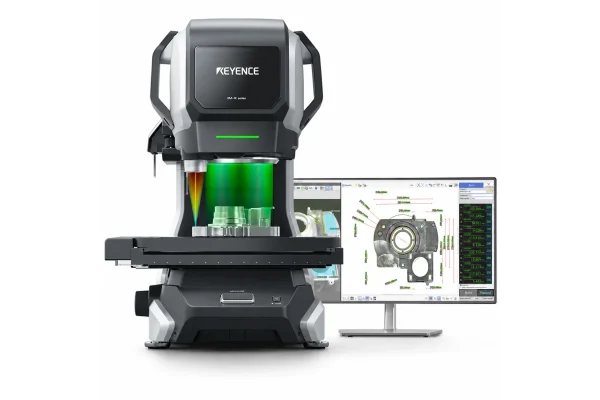
Keyende IM X

Sky Power invests in expansion of its quality assurance capabilities

Sky Power is expanding its quality assurance capabilities with new measuring technology. Automated and reproducible component inspection enables precision-critical components to be checked from the incoming inspection stage onwards.
Read more
Published: September 3, 2026
UAVs with combustion engines in agriculture 1

New Technical Paper: UAV Propulsion Systems for Agriculture

Agricultural UAVs require longer flight times, higher payloads and reliable propulsion systems. Sky Power’s new paper examines the requirements for modern UAV engines in professional agriculture.
Read more
Published: August 25, 2026
SP-110 TS (mit Rotorgraphik) News

New Technical Paper: Carburetor or Electronic Fuel Injection for UAV Engines?

Sky Power’s new technical paper explains how carburetors and electronic fuel injection systems influence efficiency, reliability and performance in high-performance two-stroke UAV engines.
Read more
Published: August 10, 2026
210_HFE_XR.532 (mit Rotorgraphik)

New technical paper: Hybrid UAV Propulsion Systems for Longer Missions

Battery-powered UAVs are efficient, but their endurance is limited by battery energy density. Sky Power’s new technical paper explains how hybrid UAV propulsion systems can extend range, increase payload capacity and open new possibilities for VTOL, ISR, BVLOS and heavy-lift applications.
Read more
Published: July 3, 2026
Long Range UAV

New Paper: Why Long-Range UAVs Still Need Combustion Engines

As UAV missions demand longer flight times, greater range, and higher payload capacities, combustion engines continue to offer significant advantages over battery-powered systems. Learn why internal combustion and hybrid propulsion technologies remain critical for long-endurance UAV applications.
Read more
Published: June 23, 2026
Two-Stroke vs. Wankel Engines for UAVs

New Paper: Push or Pull Configuration in UAVs – Which Approach Delivers the Best Performance?

The positioning of a UAV propeller has a significant impact on flight performance, engine cooling, sensor integration and overall system reliability. Discover the key differences between push and pull configurations in Sky Power International’s latest white paper.
Read more
Skypower brochure cover

Sky Power brochure

Download our newest brochure for free.

Please fill in the fields below to receive an E-Mail containing the brochure download link.

Company name
Full name
Email address (business)
Phone number (optional)
Country
Privacy policy
Newsletter
Position: 0
Slide to 5 to confirm you’re human.